

A psychic prediction can feel hopeful, unsettling or difficult to put aside. You can respect the place a reading has in your beliefs while taking time to decide what, if anything, you want to do with it.
You do not have to force an event to happen, wait indefinitely or treat uncertainty as a failure of faith. Your choices, another person’s consent and the practical facts of your life still matter.
On this page
- Pause before making a decision
- Separate the prediction from what you know
- Ask for clarity without buying certainty
- Choose actions that remain yours to choose
- Protect your wellbeing and boundaries
- Record what was said and review it fairly
- Keep support and practical options available
- Take one bounded next step
Pause before making a decision
Give yourself time to notice how the prediction has affected you. Are you excited, frightened, relieved or feeling pushed to act quickly? You can acknowledge the feeling without treating it as an instruction.
Avoid making an expensive, irreversible or deeply personal decision while you feel under pressure. A prediction does not create a deadline unless there is an independently checkable reason that a real decision is time-sensitive.
Separate the prediction from what you know
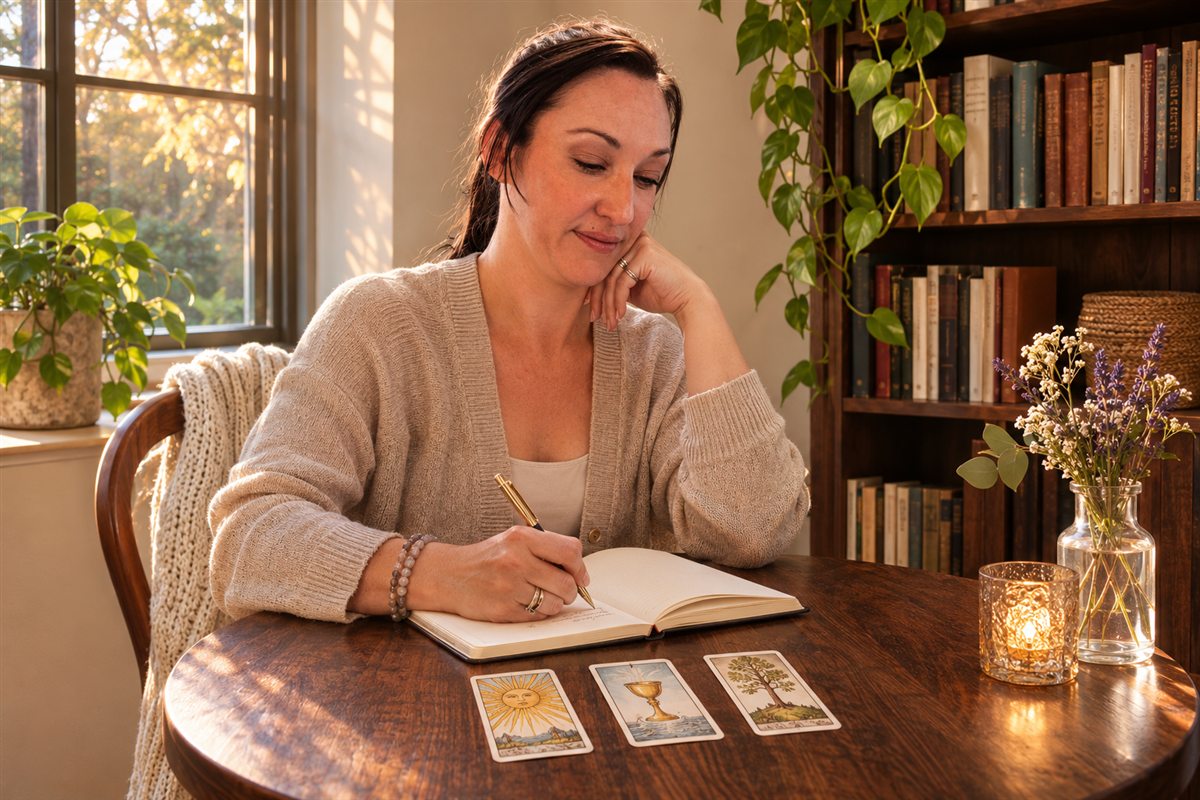
Write two short lists: what was predicted and what you can currently observe. “They said my ex will contact me” belongs in the first list. “My ex asked for no contact” belongs in the second.
Keep hopes, interpretations and facts distinct. A delayed reply, a repeated number or an ordinary coincidence does not establish another person’s intentions. If someone has declined contact, respect that choice.
Ask what you would advise yourself if you had not heard the prediction. That can help you see whether you are overlooking practical information because you want an outcome to be true.
Ask for clarity without buying certainty
If you choose to ask a reader a follow-up question, make it specific: “What exactly did you mean?” or “Was that a possibility or a definite claim?” Keep a record of the answer in the words actually used.
You do not have to pay for repeated readings to resolve every ambiguity. Be cautious about pressure to spend more to prevent harm, remove an alleged threat or make a particular relationship happen.
You can end a conversation or decline further services without proving that the prediction was wrong. Your budget and willingness are enough reason to stop.
Choose actions that remain yours to choose
Consider steps that would make sense across several possible outcomes. Updating a budget, maintaining friendships or arranging a respectful conversation can be useful without relying on a prediction coming true.
Keep other people’s choices outside your control. A reading cannot give you permission to monitor someone, bypass a refusal or keep pursuing a person who has asked you to stop.
For health, legal or financial decisions, use suitably qualified help and relevant factual information. Do not stop treatment, sign an agreement or risk money because a reading promises protection or success.
Protect your wellbeing and boundaries
Notice whether thinking about the prediction is crowding out sleep, work, relationships or ordinary enjoyment. You can take a break from readings, online searches or conversations that keep the worry active.
A familiar spiritual practice may feel comforting, but it does not have to become an obligation. You do not need to perform a ritual perfectly to deserve safety or a good outcome.
If distress persists or you feel unable to step away from the worry, talk with someone you trust or an appropriate health professional. Seeking support does not require you to abandon your beliefs.
Record what was said and review it fairly
If you want to keep a record, note the date, exact claim, any conditions and any stated timeframe. Distinguish the original wording from details you added later. Keep the record private if it includes personal information.
Choose a sensible point to review rather than checking constantly. Ask whether the original claim was specific enough to assess and whether an event really matched it without changing the wording.
An outcome that does not occur is not proof that you lacked patience or blocked it. You do not owe a prediction years of waiting, and you can stop organising your life around it.
Keep support and practical options available
Stay connected with people who can discuss the situation without pressuring you toward a particular belief or decision. You may want someone to help you compare options rather than tell you what to feel.
If a prediction concerns a relationship, look at how the relationship actually works. Can you disagree safely? Are promises followed by action? Are your needs and boundaries taken seriously?
Give yourself more than one possible future. You can prepare for a hoped-for event while also making a workable plan if it never happens. You do not have to interpret every setback as a lesson you were meant to endure.
Take one bounded next step
Choose an action that is specific and within your control: save the reading without booking another, check a relevant fact, decline a pressured purchase or talk to someone about a current concern.
Then return attention to the life you are living now. You can leave the prediction unresolved and still make thoughtful decisions. No reading needs to become the authority over your consent, safety or future.
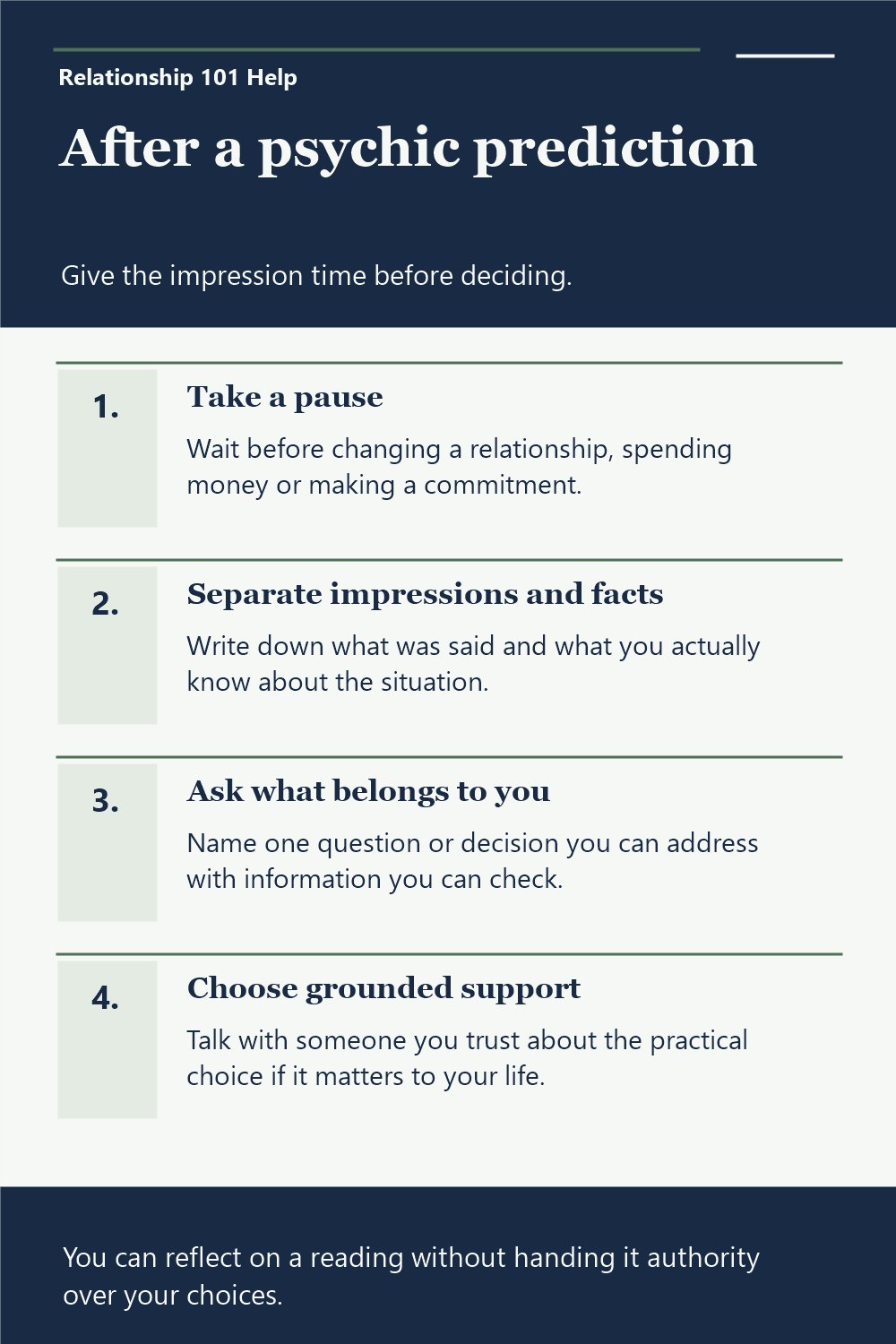
Read the infographic in text
After a psychic prediction
Give the impression time before deciding.
- Take a pause Wait before changing a relationship, spending money or making a commitment.
- Separate impressions and facts Write down what was said and what you actually know about the situation.
- Ask what belongs to you Name one question or decision you can address with information you can check.
- Choose grounded support Talk with someone you trust about the practical choice if it matters to your life.
You can reflect on a reading without handing it authority over your choices.