

Helping a partner feel accepted does not require you to decode every gesture, draw out private stories or agree with everything they say. It involves taking an interest in the person while leaving room for both of you to speak honestly.
People differ in how they express affection and discuss feelings. Ask about the individual in front of you rather than assuming that gender tells you how they communicate or what they need.
On this page
Ask what feels welcome
A direct, low-pressure question can be a good starting point: “Would you like to talk about it, do something together or have some space?” You do not need to disguise your interest to make someone comfortable.
Offer choices that you can genuinely support. If you are unavailable for a long conversation, say so and suggest another time when you can listen.
A person may not want to explain a feeling immediately. Respecting that pause does not mean agreeing that every important issue can be avoided indefinitely. You can also ask when a shared concern can be discussed.

Notice care without claiming to know its meaning
A practical favour, an invitation or a thoughtful message may matter to you. Appreciate what happened specifically: “Thank you for checking the route; that made the morning easier.”
If you are unsure what a gesture means, ask. Opening a jar, fixing something or inviting you to watch a programme does not automatically reveal a person’s feelings or intentions.
You can enjoy different interests without pretending to like everything your partner likes. Try joining an activity when you want to, and leave room for each person to have interests of their own.
Listen and check what kind of response helps
When someone shares a concern, let them finish before supplying the lesson or solution. You might say, “That sounds difficult. Would you like ideas, or would you rather I listen?”
You can check your understanding without endorsing every conclusion: “Have I understood that you felt overlooked?” Their experience can matter even when you remember an event differently.
If a conversation becomes too much for either person, agree on a pause and a realistic return time. Being accepting does not require unlimited availability or perfect calm.
Respect privacy without giving up your own support
Ask before sharing someone’s private story, personal information or an embarrassing detail. You do not have to make a partner’s vulnerability into material for a public conversation or social post.
At the same time, privacy should not become a rule that isolates you. You can seek confidential support about your own experiences, especially when you feel frightened, pressured or unsure how to respond.
Avoid promising absolute secrecy before you know what is being shared. You can care about a person while taking a concern seriously and choosing appropriate help.
Keep disagreement and boundaries possible
Acceptance does not mean approving harmful behaviour. You can say, “I understand that you were upset, and I still need us to talk without insults.” Both parts can be true.
Be clear about the distinction between a preference and a limit. You may be happy to try a shared hobby while remaining unwilling to share passwords, lend money or continue a conversation that becomes threatening.
Do not use warmth as a technique to obtain a confession or make someone more compliant. Offer care honestly, and allow the other person to choose what they share.
Make room for both people
Ask whether the relationship offers you the same room to speak, disagree and have separate interests. One person should not have to become the permanent listener or keeper of every difficult feeling.
Choose a small way to make care more mutual: take turns choosing an activity, ask what support would help this week or revisit a responsibility that one person has been carrying alone.
Notice how those conversations are received over time. You can value your partner’s individuality while deciding whether the relationship also respects yours.
When your partner wants more family visits
Try: “I see why Sundays with your family feel important. I need some quiet weekends too. Could we choose two Sundays this month and keep the others open?” This gives each need a place in the plan.
A conversation can acknowledge a feeling without treating it as a final decision. Notice whether your partner also makes room to hear you.
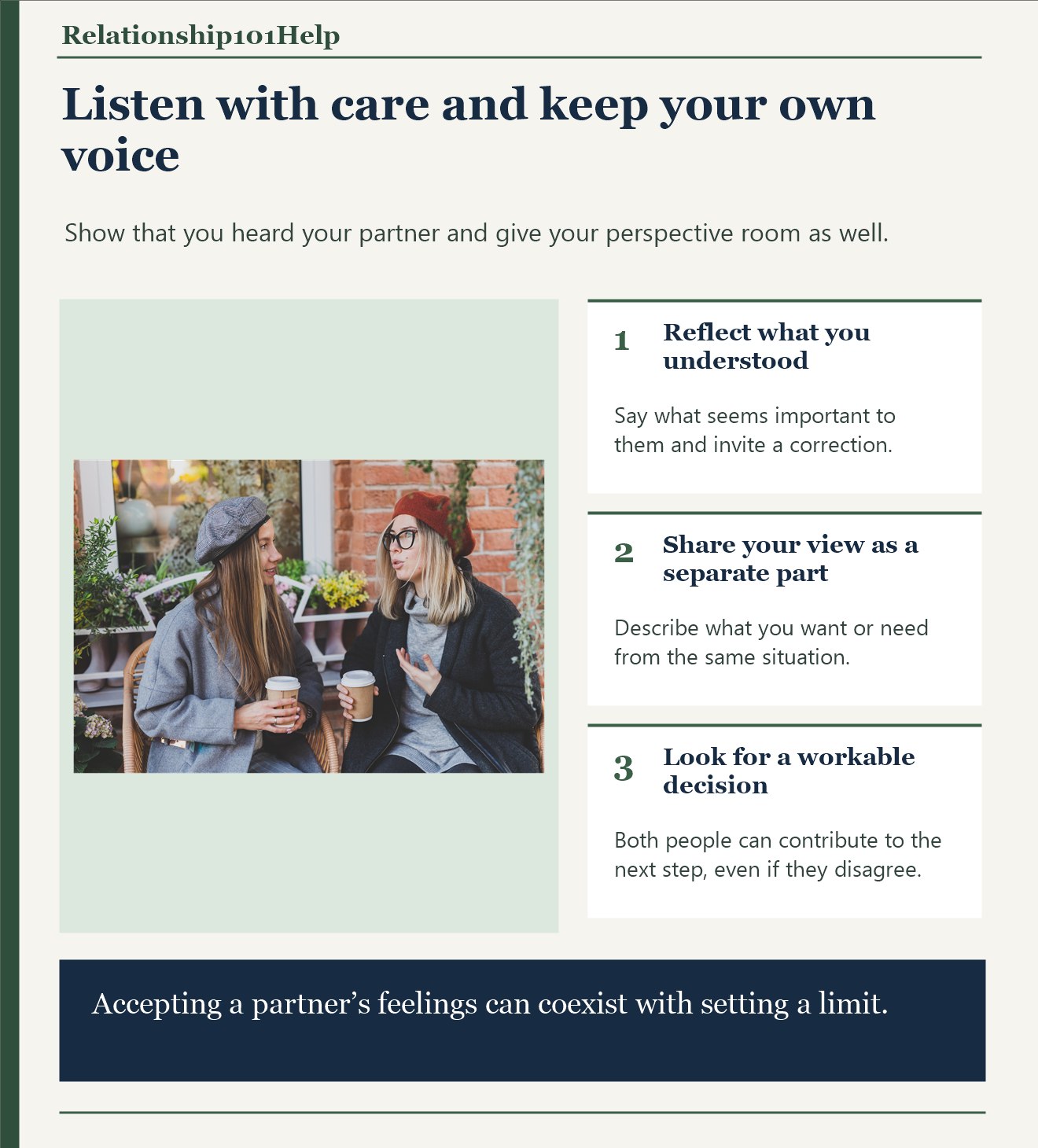
Read the infographic in text
Listen with care and keep your own voice
Show that you heard your partner and give your perspective room as well.
- Reflect what you understood Say what seems important to them and invite a correction.
- Share your view as a separate part Describe what you want or need from the same situation.
- Look for a workable decision Both people can contribute to the next step, even if they disagree.
Accepting a partner’s feelings can coexist with setting a limit.