

Looking for a soulmate can express a wish for a close, meaningful partnership. The word may have a spiritual meaning for you, or it may simply describe someone you hope to share your life with. You can value that hope while staying curious about the person you are actually getting to know.
Problems can arise when the search becomes a test of whether you are good enough, a promise that one person will complete your life or a reason to overlook what you want. The four questions below can help you keep the search connected to mutual interest and everyday choices.
On this page
Are you waiting to become “ready enough” for love?
You do not have to love every part of yourself, enjoy every moment alone or finish a programme of self-improvement before you deserve care. Confidence can change from day to day. Being lonely, uncertain or disappointed does not disqualify you from a respectful relationship.
Self-reflection is useful when it helps you make a choice. You might notice that you agree to plans you do not want, avoid asking about commitment or abandon your interests when you begin dating. Choose a specific habit to practise rather than treating yourself as a project that must be completed before someone can love you.
For example, if you usually accept an inconvenient plan to avoid seeming difficult, try offering a real alternative: “I cannot do Friday, but I would like to meet on Sunday.” You are sharing information the other person needs, not trying to become attractive enough to earn a response.
If reflection leaves you repeatedly blaming yourself for being single, step back. The absence of a partner is not evidence that you have failed to develop the right energy or become a better person.
Are you expecting a partner to supply all your happiness?
Wanting companionship is understandable. A partner can share affection, conversation and practical support. They cannot reliably provide every friendship, interest, source of confidence or answer to loneliness, and you do not need to promise that role for them either.
Consider what you hope a relationship would add, then identify any parts you can support now. If you want someone to spend weekends with, you could make a plan with a friend while continuing to date. If you want to feel heard, you might ask a trusted person for time to talk. These choices do not cancel your wish for romance.
Keep some room for your own life as a connection grows. The NHS guide to healthy relationships suggests making time for your interests, setting boundaries and talking to someone you trust outside the relationship. You can build closeness without making one person your only source of support.

Are you fitting a person into a story?
A striking coincidence, strong attraction or familiar feeling can matter to you. It cannot tell you whether another person wants commitment, respects your privacy or shares your plans. Try keeping a distinction between what an experience means to you and what the two of you have actually agreed.
A list or vision board can be a way to explore preferences. Use it to start questions rather than to predict a person or demand a perfect match. Separate a basic need, such as respect for your boundaries, from a preference you might be flexible about, such as sharing a favourite hobby.
Notice ordinary interactions as well as exciting ones. Can you disagree? Do plans and words usually match? Are you both interested in learning about each other? Healthy Relationship Basics: Respect, Trust, and Freedom offers a starting point for thinking about those patterns.
If you use spiritual reflection, keep space to change your mind about a particular relationship. A meaningful interpretation does not require you to ignore discomfort, accept pressure or continue contact that you no longer want.
Are you leaving room for mutual choice?
Knowing what you want does not make another person want the same thing. You can invite a conversation without treating the answer as a challenge to overcome. If someone has clearly declined dating or commitment, repeated pursuit is not a way to establish that they are your soulmate.
Where things are unclear, ask about the choice in front of you: “Would you like to keep dating?” or “Are you interested in an exclusive relationship?” Listen for what is being offered now, rather than building your plans around what you hope they will eventually decide.
You may need time to decide whether an arrangement fits you. Waiting for Someone to Choose You: Clarity, Boundaries and Your Options explores that situation. Your preference for a relationship matters, alongside the other person’s freedom to choose.
For a useful next step, name one need, one flexible preference and one question you want to ask when dating. That keeps the search grounded in something you can discuss and act on. You can hope for a meaningful connection without having to prove that it was destined or guaranteed.
When the chemistry is strong and important questions go unanswered
If you enjoy every date but the person avoids a question about future plans, ask directly when you are ready. Choose one answer you need so you can decide whether to keep getting closer.
A meaningful connection still leaves both people room to want different things. Learning that earlier can help you make a clearer choice.
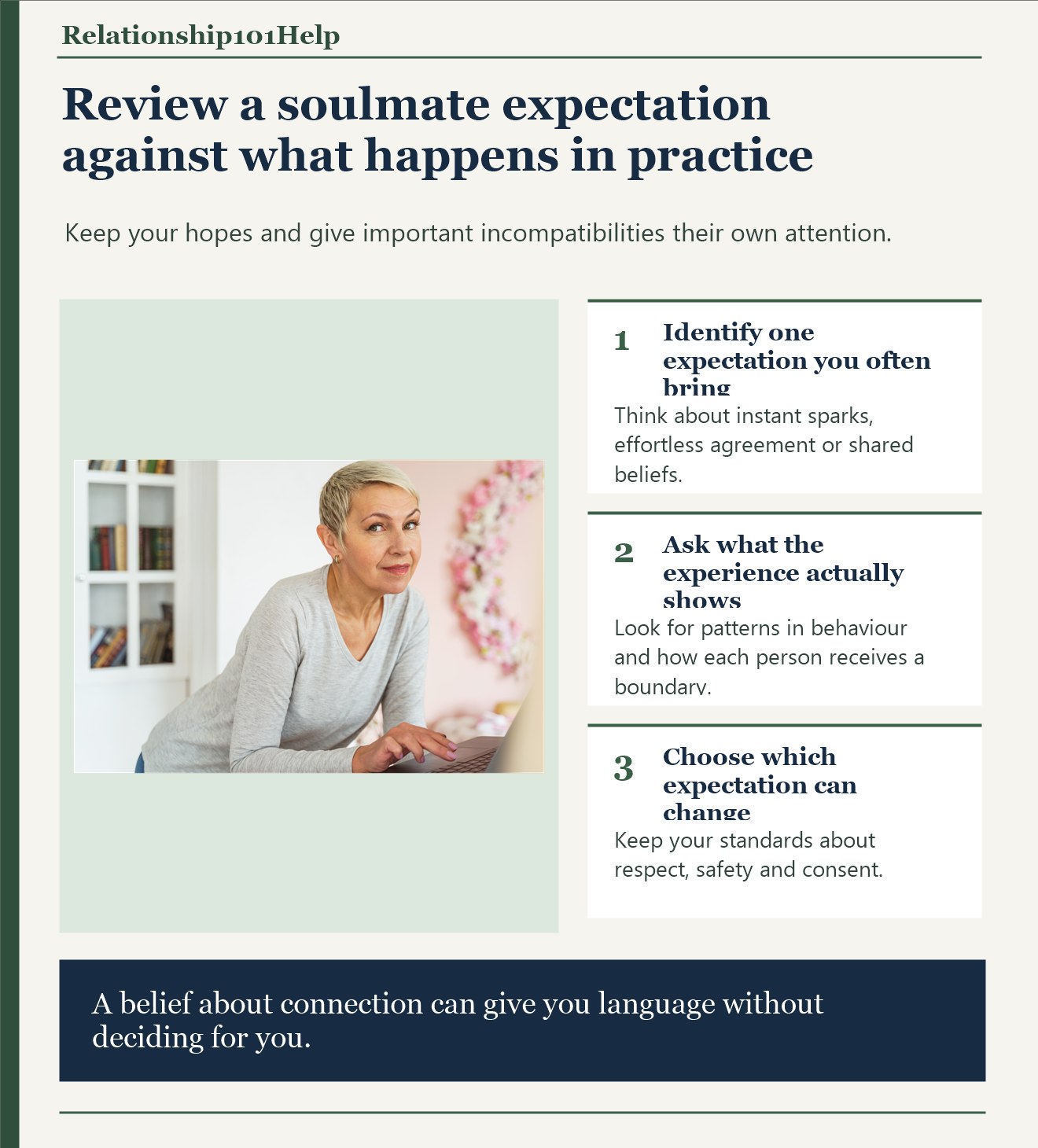
Read the infographic in text
Review a soulmate expectation against what happens in practice
Keep your hopes and give important incompatibilities their own attention.
- Identify one expectation you often bring Think about instant sparks, effortless agreement or shared beliefs.
- Ask what the experience actually shows Look for patterns in behaviour and how each person receives a boundary.
- Choose which expectation can change Keep your standards about respect, safety and consent.
A belief about connection can give you language without deciding for you.