

After a breakup, feelings can be strong, changeable or difficult to name. You may feel sadness, anger, relief, numbness or a mixture. You do not have to become emotionally steady before you deserve support or can make a practical decision.
Begin with the next part of the day rather than a deadline for healing. What needs attention now, what can wait, and who could help with one particular thing?
On this page
Make room for the feeling without judging yourself
You can acknowledge a feeling without acting on every urge it brings. Missing your ex does not require sending a message. Anger does not excuse threats or repeated contact. A pause can give you room to choose what to do next.
Try a description that fits the moment: “Evenings feel lonely” or “I feel unsettled after seeing an update.” You do not need to explain your entire personality to identify a difficult part of the day.
The NHS guide to grief and loss recognises that a relationship ending can bring grief. It describes varied responses rather than a fixed sequence everyone must complete.
Separate urgent arrangements from the wider future
If you share a home, responsibilities or belongings, list the decisions that actually need attention. Do not assume that moving out immediately is possible or appropriate. Arrangements may need information and relevant local advice before you can choose a next step.
For necessary communication, consider a clear topic and a channel you can manage. A brief message about collecting an item does not need to reopen the relationship discussion. Respect an ex’s request for space and avoid using practical matters to keep a conversation going.
If there are threats, intimidation or control, prioritise confidential individual support. A plan for contact or collecting belongings should take safety into account rather than assume a direct meeting will be comfortable.

Give ordinary care a place in the day
Choose a basic need you can address: something to eat, a regular medication if you take one, rest or preparing for an appointment. A difficult day may call for a simpler version of your routine.
You do not have to feel motivated before asking for practical help. Someone might bring a meal, sit with you while you organise a task or help you remember a commitment. Say what would be useful and listen to what they can offer.
Leave room for an interest or activity that belongs to you. A familiar book, a short walk you enjoy or a few minutes on a hobby can be enough. You do not need to pay for a trip, start an intense programme or rebuild your identity all at once.
Choose support and social contact that suit you
Tell a trusted person what kind of company you want. You might prefer a quiet meal, a short call or conversation about something other than the breakup. You do not have to attend a busy event to prove that you are doing well.
If social media keeps drawing you into upsetting comparisons, consider muting updates or taking a break. This is an option to review, not a rule about how a mature breakup must look.
You can ask friends to listen without reporting on your ex’s private life. Support does not need to involve choosing sides, monitoring another person or comparing who appears to have moved on first.
Review your needs and seek help when you want it
Notice what is becoming easier and what remains difficult. That information can guide the next adjustment. A hard day after an easier one does not erase what has helped, and slower progress is not proof that you are refusing to heal.
If distress is affecting daily life, feels increasingly difficult or is not easing with the support you have, speak with a healthcare professional or qualified counsellor. You can ask for help before reaching a crisis.
If you feel unable to keep yourself safe, contact local emergency or crisis support immediately. You do not have to manage an immediate danger by yourself.
Recovery does not need to be a performance of strength. For today, choose one useful action and one source of support, with room to change the plan as your needs become clearer.
Read the infographic in text
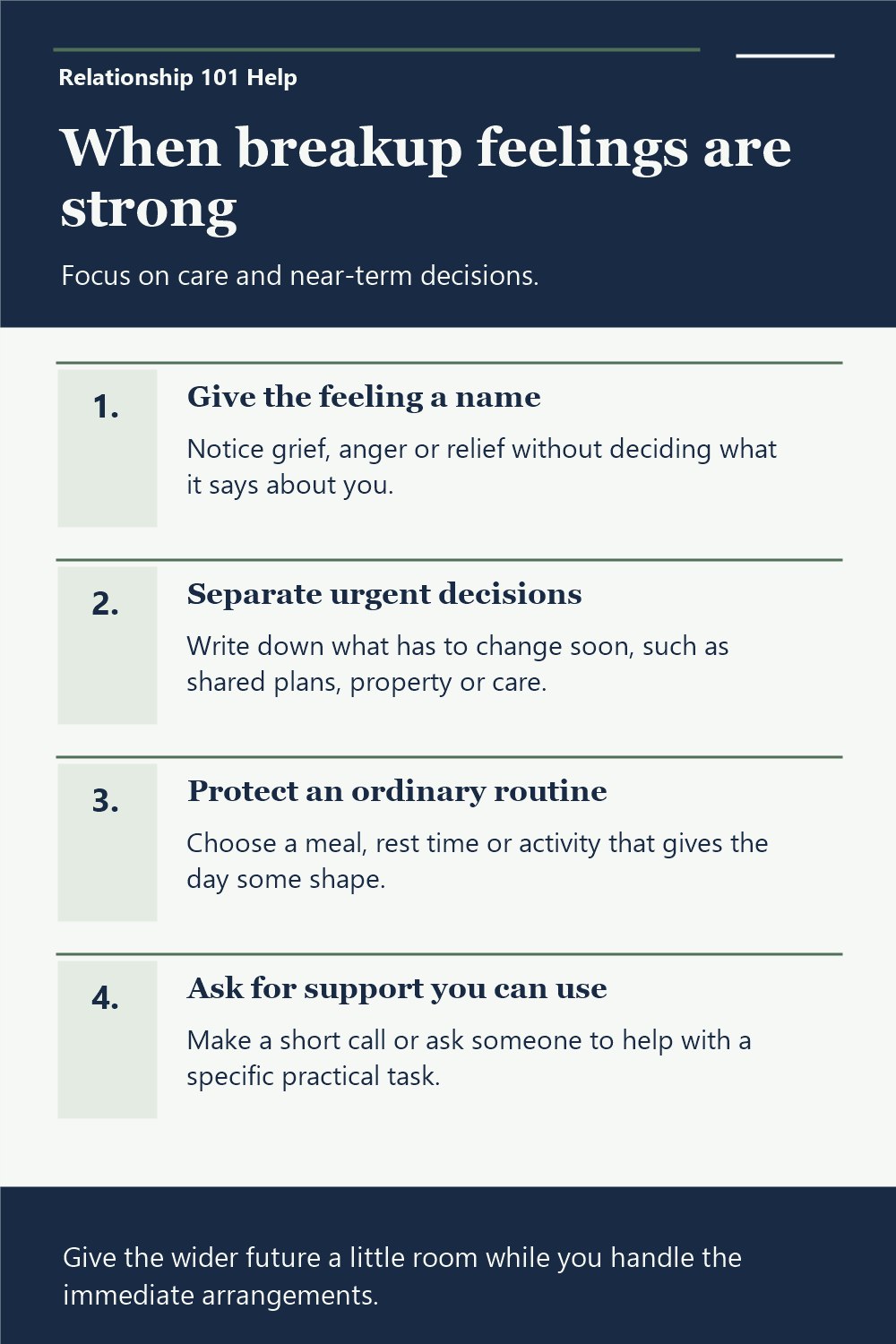
When breakup feelings are strong
Focus on care and near-term decisions.
- Give the feeling a name Notice grief, anger or relief without deciding what it says about you.
- Separate urgent decisions Write down what has to change soon, such as shared plans, property or care.
- Protect an ordinary routine Choose a meal, rest time or activity that gives the day some shape.
- Ask for support you can use Make a short call or ask someone to help with a specific practical task.
Give the wider future a little room while you handle the immediate arrangements.