

Changes in attraction or sexual interest can be difficult to discuss. You may miss closeness, feel rejected or worry about how a conversation will affect your partner. Those feelings deserve attention without turning another person’s body into a problem they must fix.
Start with what is happening between you and what each person wants now. There is no guaranteed technique for restoring desire, and neither partner owes sex, weight loss or a return to an earlier version of themselves.
On this page
Keep feelings separate from responsibility
You can notice an attraction to someone else without acting on it. If you have made an agreement about exclusivity, you remain responsible for whether you keep it. A change in your partner’s appearance or interest does not make cheating inevitable or their fault.
Be honest with yourself about the concern. Do you miss affection, enjoyable time, a particular kind of contact or feeling appreciated? Naming the issue clearly is more useful than treating your partner as generally unattractive or inadequate.
If you have broken an agreement, address that choice directly rather than presenting your partner’s body or workload as its explanation. Repair requires accountability, and the other person remains free to decide what they want.
Talk about closeness without criticising a body
Choose a time when neither of you is being asked to perform sexually. You might say, “I miss feeling close to you, and I would like to understand how things have been for you.” Ask whether the conversation is welcome now.
Describe your experience without comparisons to a colleague, an old photograph or another couple. “I miss relaxed time together” gives you something to discuss. “You used to look better” puts someone in the position of defending their body.
Listen to the actual answer. Your partner may want more connection, a different kind of affection, more space or time to understand their own feelings. You do not need to settle everything in one conversation.
Look at the work and rest in everyday life
Review what each person is carrying: paid work, childcare, household tasks, planning and the effort of keeping things running. Ask where there is room for rest and which responsibilities need a clearer owner.
Taking on a fair share is part of living together; it is not a payment that entitles you to sex. Make a practical agreement because the arrangement needs to work for both people.
You might take responsibility for a whole task, including planning and follow-through, or protect time when neither person is expected to organise an activity. Check whether the change helps rather than assuming that a particular response should follow.
Keep affection and shared time optional
Ask what contact would feel welcome: a walk, a quiet meal, holding hands or time together without touch. A person can enjoy one kind of closeness and decline another.
If you plan a date or a quiet evening, leave room for tiredness, changing preferences and an ordinary ending. A kind gesture is not a contract for intimacy.
Do not use exercise, clothes or grooming as conditions for receiving affection. You can share activities you both enjoy without turning someone’s appearance into a relationship performance target.
Allow recovery and changing circumstances their own pace
After childbirth, the NHS guidance on sex after birth advises against rushing and describes other ways to remain close. If contact hurts or there are ongoing worries, pause and seek appropriate healthcare support.
You do not have to guess the cause of a change or diagnose your partner. Ask what feels manageable and avoid treating discomfort, tiredness or a refusal as proof that they do not care.
Keep any next step voluntary. A conversation about closeness can include practical support and patience without setting a deadline for someone to become ready.
Review what each of you wants next
Choose one or two changes you both want to try and a time to discuss how they feel. The aim is useful information, not a promise that attraction will return.
If you both want support and can participate safely, you can consider qualified relationship or individual help. Neither person has to accept a particular explanation or commit to staying before asking for support.
Sometimes needs remain different. You can face that honestly while protecting dignity, consent and your own choices. A relationship decision does not need to be justified by blaming someone’s body.
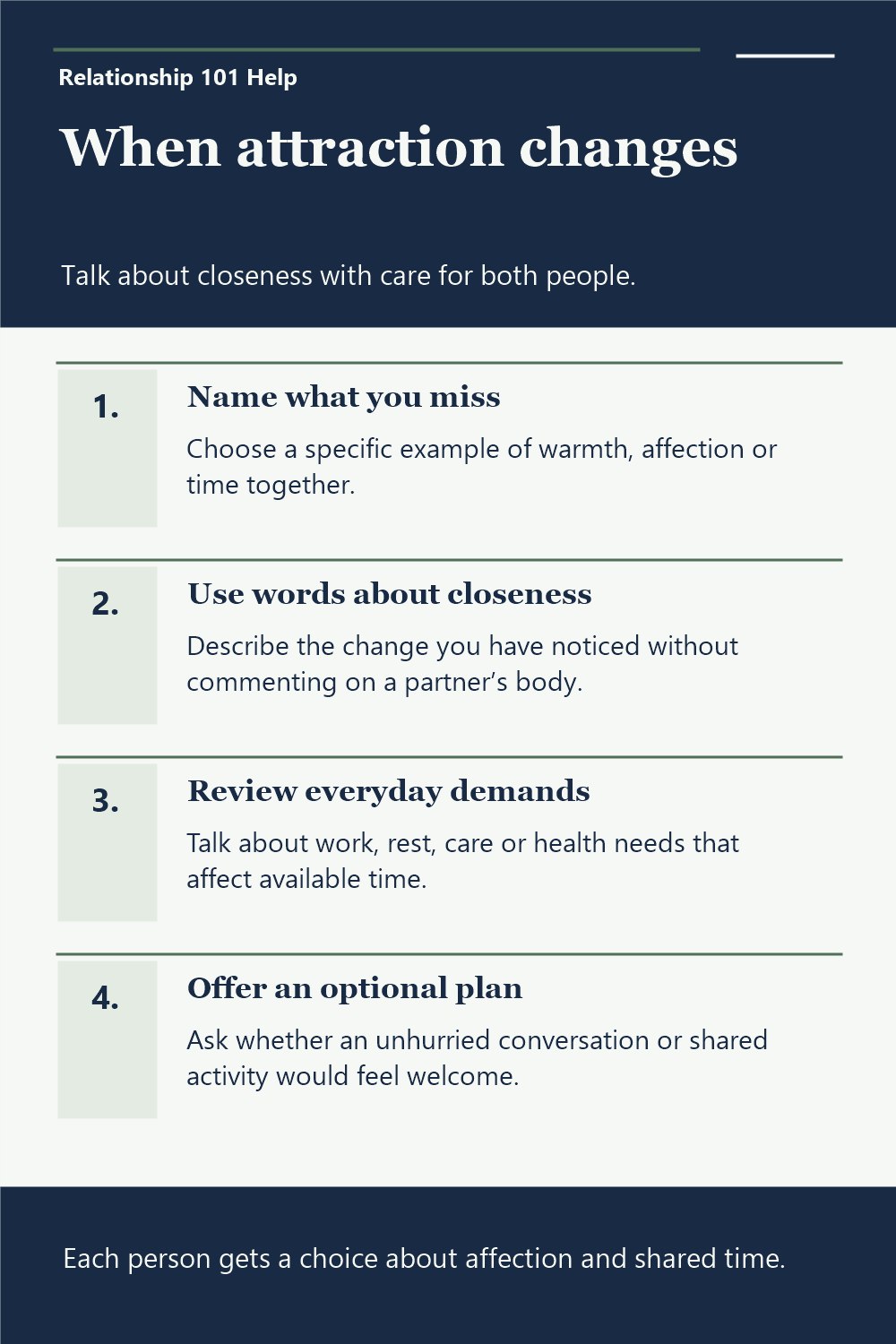
Read the infographic in text
When attraction changes
Talk about closeness with care for both people.
- Name what you miss Choose a specific example of warmth, affection or time together.
- Use words about closeness Describe the change you have noticed without commenting on a partner’s body.
- Review everyday demands Talk about work, rest, care or health needs that affect available time.
- Offer an optional plan Ask whether an unhurried conversation or shared activity would feel welcome.
Each person gets a choice about affection and shared time.