

People often use “toxic love” to describe a relationship that repeatedly leaves them hurt, controlled or unable to be themselves. The phrase can express how difficult things feel, but it does not diagnose a person or tell you why they behave as they do. Looking at specific actions gives you a clearer basis for deciding what you need.
You can care about someone and still want more distance, different boundaries or an end to the relationship. You do not have to prove that every part of the relationship is bad before taking a recurring problem seriously.
On this page
Describe the pattern clearly
Start with what happens. Does someone repeatedly insult you, decide whom you may see, pressure you sexually or threaten consequences when you disagree? Is the concern an occasional disagreement that can be repaired, or a repeated pattern in which one person’s wishes leave little room for the other?
You do not need to know someone’s childhood, intentions or personality type to describe the effect on you. Avoid turning an explanation into a reason you must accept the behaviour. The person making a harmful choice remains responsible for that choice.
Include family relationships in the picture
Pressure can come from a partner, relative or friend. Shared history may make decisions complicated, especially if you depend on someone for housing, care or money. That dependence deserves practical consideration; it does not make hurtful treatment acceptable.
If useful and safe, note a few specific incidents and what happened afterward. Store notes only where doing so will not expose you to additional risk. You do not have to keep a detailed record or gather proof before asking for support.
Separate love from obligation
Affection, loyalty and gratitude can matter deeply. They do not give someone unlimited access to your time, body, money or private information. You can appreciate past kindness without agreeing to a request that is uncomfortable or unmanageable now.
Consider what the relationship costs you
Ask what has become harder: keeping friendships, making choices, resting, managing work or feeling able to say no. Describe the change without blaming yourself for not having prevented it. You can seek help while feeling attached, uncertain or worried about the other person.
You may also notice good moments. Those do not erase a harmful pattern, just as one disagreement does not define an entire relationship. Focus on whether respect and room to choose are present consistently enough for the relationship you want.
Assess change through actions
People can choose to work on their behaviour, but you cannot make that choice for them or promise its outcome. Look for responsibility without excuses, respect for your limits and changes that continue beyond an apology. A gift or an intense declaration does not answer a concern about ongoing control.
When talking feels safe, make a request specific enough to understand: “Please ask before sharing my personal news” or “I want us to decide shared expenses together.” If the answer is repeated ridicule or pressure, you can take that response into account rather than searching endlessly for better wording.
You do not owe an unlimited trial period. Our guide to whether a relationship is worth working on considers mutual effort and the choices available to you.
Make choices with support
Leaving, reducing contact or staying while you prepare can each involve practical difficulties. Housing, caregiving, children, disability, money and fear of retaliation can affect what is possible. Difficulty leaving is not a measure of courage, intelligence or self-respect.
If there are threats, intimidation, monitoring or violence, consider confidential help from a domestic abuse service before confronting the person or announcing plans. In the US, the National Domestic Violence Hotline provides personal safety-planning information. Elsewhere, seek an appropriate local service. Use a safer device if your browsing may be monitored; contact local emergency services in immediate danger when safe to do so.
Choose someone who will respect your decisions
You might begin with a trusted person outside the relationship: “I need someone to listen and help me think about practical options.” You can ask for a specific kind of help, such as a private place to talk or support finding local advice. You do not have to disclose every detail to receive help.
Set limits you can use
A boundary describes what you are willing to do, rather than forcing another person to feel differently. For example: “I’m not lending money. I can help you look for other information.” Choose wording and actions that fit your situation; where you fear retaliation, specialist safety planning takes priority over practising a direct script.
In a relationship without intimidation, you might shorten visits, decline a topic or arrange a pause when conversations become insulting. Notice whether those limits are respected. You can change the amount of contact you want without needing everyone’s agreement about the past.
Allow mixed feelings afterward
Relief, guilt, sadness and missing someone can coexist after a decision. A feeling does not automatically mean you chose wrongly or need to resume contact. Keep everyday support available and review practical arrangements as your circumstances change.
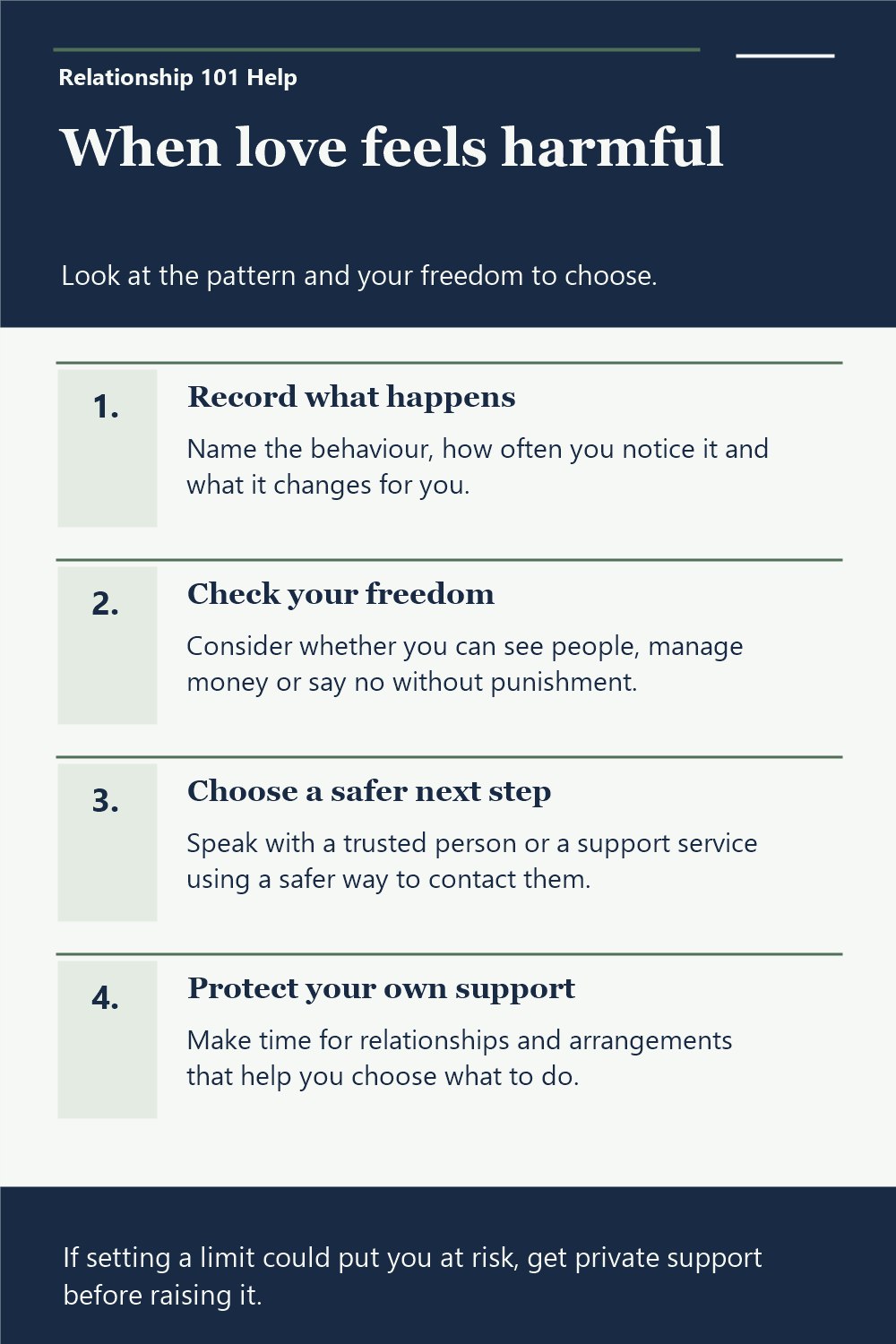
Read the infographic in text
When love feels harmful
Look at the pattern and your freedom to choose.
- Record what happens Name the behaviour, how often you notice it and what it changes for you.
- Check your freedom Consider whether you can see people, manage money or say no without punishment.
- Choose a safer next step Speak with a trusted person or a support service using a safer way to contact them.
- Protect your own support Make time for relationships and arrangements that help you choose what to do.
If setting a limit could put you at risk, get private support before raising it.